From Digital Twin to Automated Work Orders: Turning Field Data into Action
Today: 3/16/2026 - USI Orion AI Lab
Nvidia GTC starts today, and USI jumps in with its launch of digital twins within the Unify platform – an AI enabled standardization approach that interconnects real field data with digital asset management.
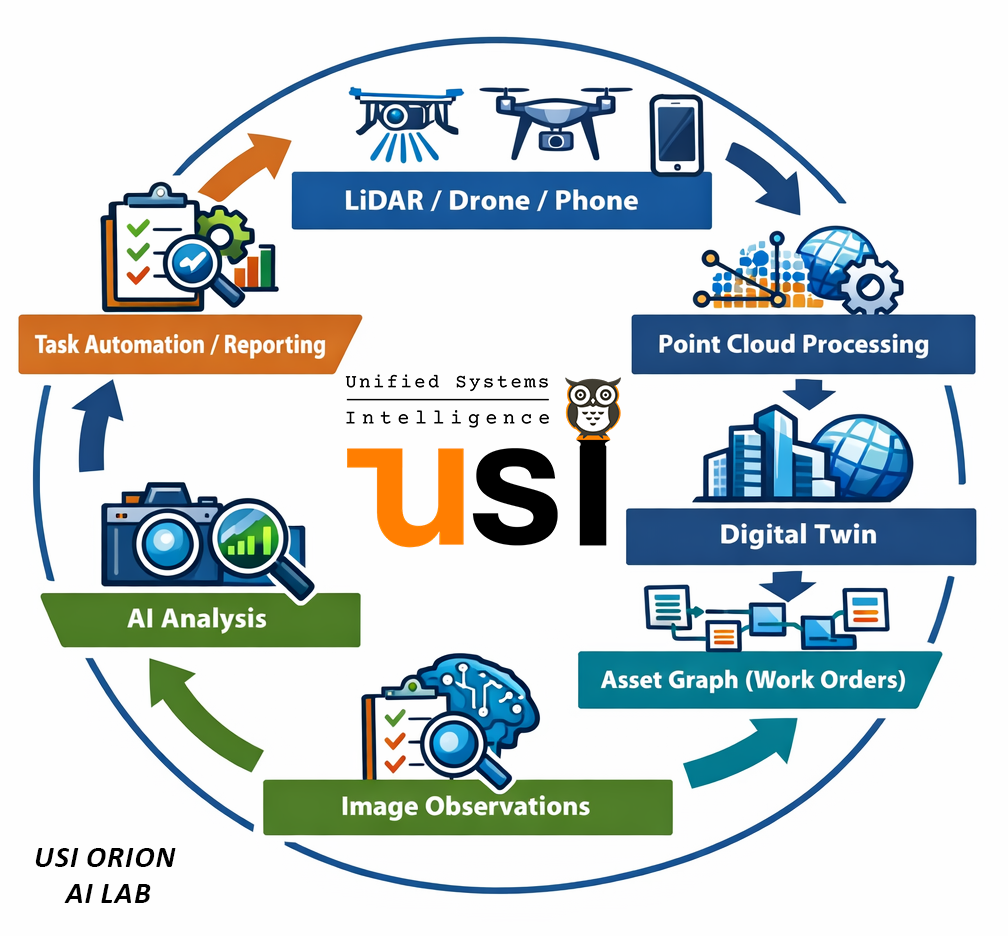
Infrastructure operators face a persistent problem: the physical world changes faster than documentation can keep up. Towers shift, equipment moves, vegetation grows, and hardware degrades. Most organizations rely on periodic inspections, manual reporting, and scattered image records to understand those changes. The result often leads to delayed maintenance, incomplete records, and operational blind spots.
To address this challenge in our Orion AI Lab, we built a test framework inside the Unify platform that connects digital twin models, field imagery, and AI analysis into a single operational pipeline. The goal was straightforward: determine whether digital twins and field observations could work together to automatically generate actionable tasks for infrastructure maintenance. These tasks can be assigned to downstream general and sub-contractors automatically where they pass the field standards into the phone application that power the tech’s day.
The results of this testing showed that this approach can move asset owners, carriers, and GCs beyond passive digital twins and toward AI automated operational intelligence.
Building Digital Twins of Cell Tower Environments
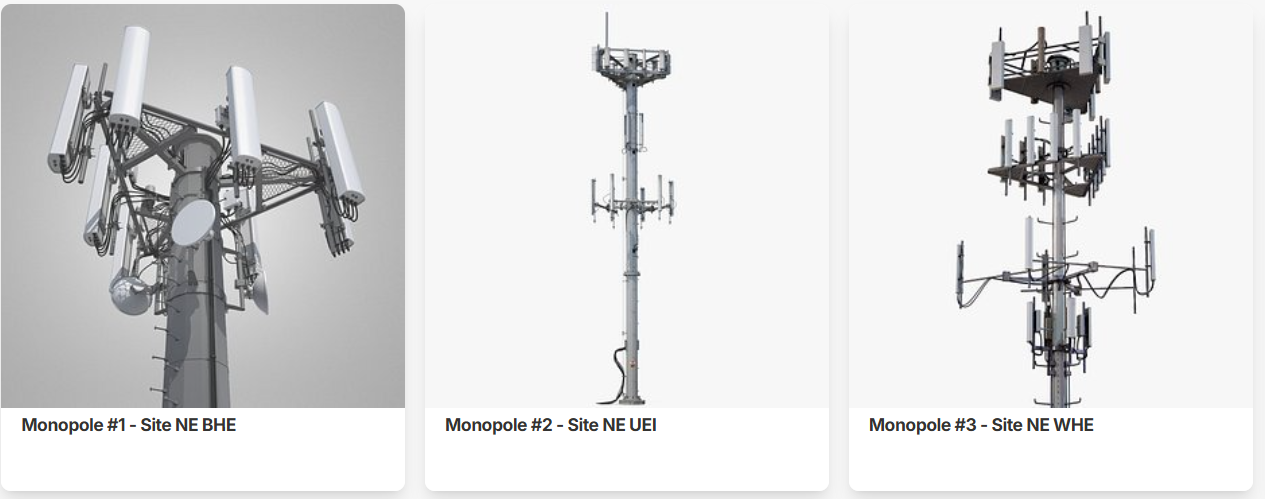
The first step focused on creating digital representations of physical infrastructure. We developed digital twin models of multiple cell tower environments, each representing a different terrain and structural configuration.
Using LiDAR and spatial capture methods, we produced geometric models that represent:
- Tower structures
- Ground infrastructure and equipment pads
- Cable runs and mounting hardware
- Environmental context surrounding the site
Each digital twin acts as a baseline model of the physical environment. Rather than serving as a static visualization, these models provide structured spatial data that can be compared against real-world observations over time.
Capturing Image Observations from the Physical Environment
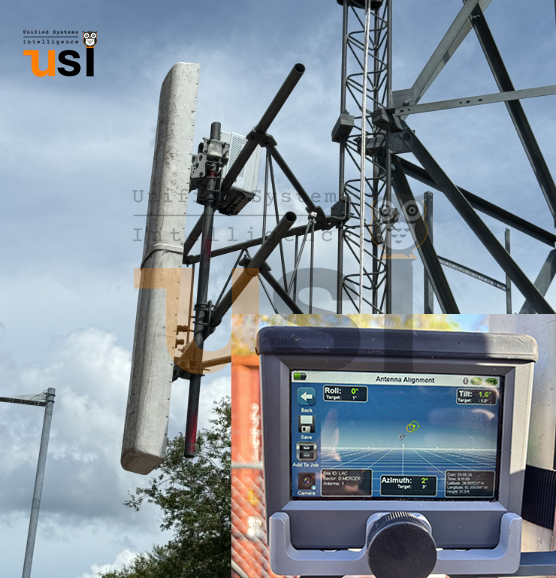
Once the digital twins existed, we introduced a second dataset: field imagery collected from the actual tower environments. These images captured the operational state of each location, including:
- Equipment configuration
- Structural conditions
- Environmental changes
- Site access conditions
The images provided the observational layer of the system. Where the digital twin describes what the site should look like, field imagery shows what the site actually looks like during inspection or maintenance activities.
Linking these two perspectives created the foundation for automated comparison.
Cloud-Based Data Storage and Processing
We then stored both datasets in cloud infrastructure within the Unify environment. This included:
- Digital twin spatial models
- Image observation datasets
- Associated metadata such as timestamps, location identifiers, and asset references
Cloud processing allowed the system to maintain structured access to both datasets while supporting large-scale processing and analysis.
The key design decision involved preserving the metadata relationships between the digital twin objects and the field observations. This relationship allowed the system to treat both datasets as components of a single operational model rather than independent files.
AI Analysis Through the Unify AI Lab
With both datasets aligned, we introduced AI analysis through the Unify AI Lab. The AI models examined metadata from both sources and performed structured comparisons between:
- Digital twin geometry and configuration
- Image observations collected from the field
Rather than analyzing images in isolation, the models used the digital twin as a reference state for each tower location.
This approach enabled the system to detect differences such as:
- Missing or moved equipment
- Structural irregularities
- Unexpected environmental changes
- Configuration mismatches
By anchoring the analysis to a digital twin reference, the AI models could identify changes that might otherwise require manual inspection.
Learning Alliance Training Tower - Wesley Chapel, FL Virtual Tour
Detecting Variance Between the Model and Reality
The AI processing stage produced variance results that highlight differences between the digital twin model and the observed field imagery.
These variances represent situations where the physical environment does not match the expected configuration defined in the digital twin.
Examples include:
- Equipment mounted in unexpected locations
- Hardware components missing from their expected positions
- Structural changes affecting tower integrity
- Environmental factors interfering with site access or safety
Instead of simply flagging anomalies, the system categorizes these observations and prepares them for operational response.
Generating Automated Work Orders
The final stage converts anomaly data into task automation within the Unify platform. When the AI identifies a variance, the system can automatically generate:
- Work orders
- Task lists
- Assigned responsibilities
- Documentation requirements
These work orders can then be assigned to downstream contractors responsible for maintenance or remediation. This process transforms the digital twin from a passive model into an operational decision engine. Rather than relying on manual inspection reports, organizations can move directly from observation to task assignment.
A Unified Operational Platform
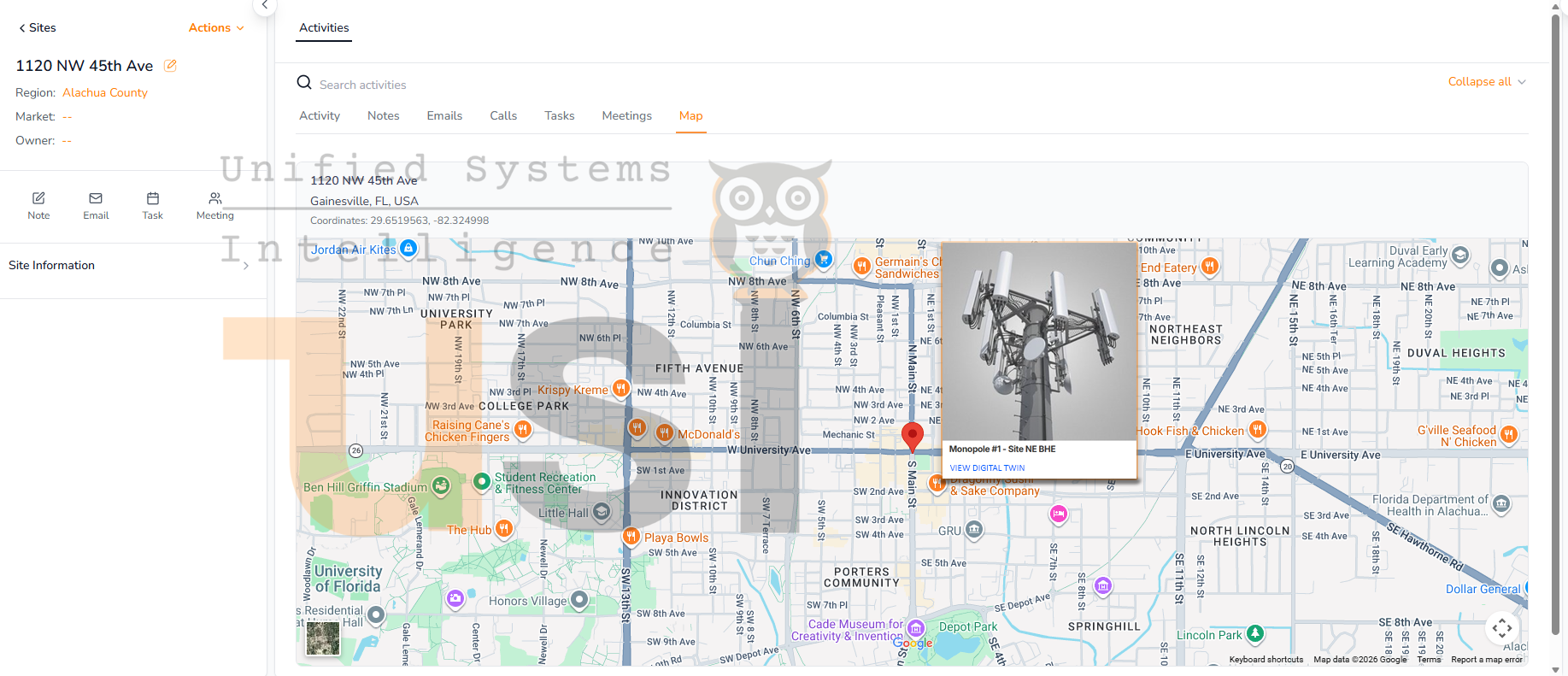
All stages of this workflow occur within a single system: the Unify platform. Unify manages:
- Digital twin storage
- Image observation records
- AI analysis
- Anomaly detection
- Task generation
- Contractor assignment workflows
- Crew Validation for Worksites
By keeping these components in one platform, organizations avoid the fragmentation that often occurs when digital twin systems, inspection tools, and maintenance software operate separately. The result creates a continuous operational loop:
- Capture field data
- Compare against digital twins
- Detect anomalies
- Generate work orders
- Assign remediation tasks
- Validate workforce requirements
- Collect field imagery data
- Re-evaluate upon changes
This loop turns infrastructure monitoring into an automated process rather than a periodic manual exercise.
Moving from Visualization to Operational Intelligence
Digital twins often remain confined to visualization tools or simulation environments. While those uses provide value, they rarely connect directly to operational workflows. Our test environments demonstrated that digital twins become far more powerful when combined with:
- real-world observations
- structured metadata
- AI-based comparison
- automated task generation
- field operation validation
In this model, the digital twin acts as the reference layer for operational intelligence. When paired with field observations and automation systems, it becomes possible to move from monitoring infrastructure to actively managing it through data-driven workflows.